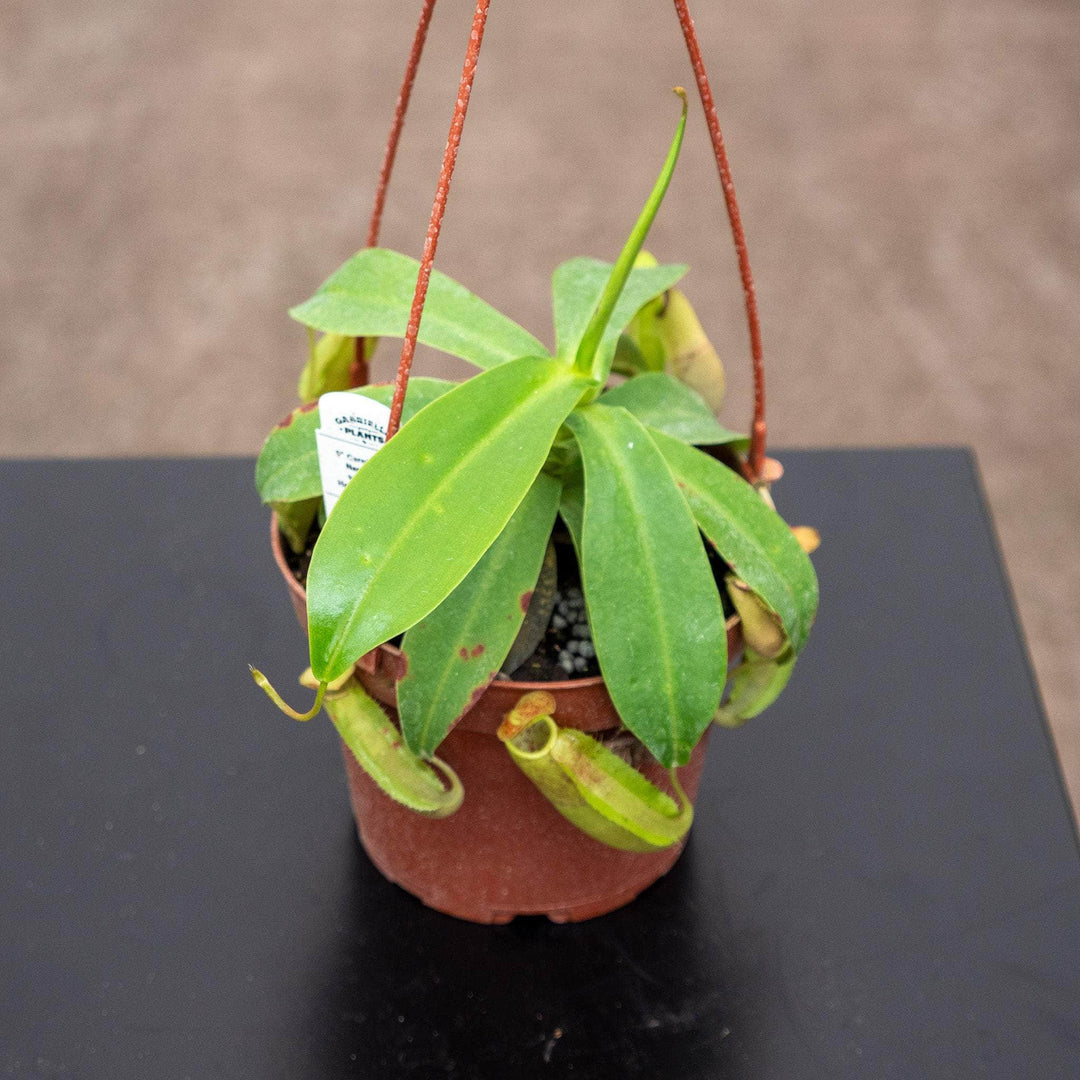
Carnivorous Nepenthes sanguinea
- Family-owned nursery located in Oviedo, FL
- From Our Greenhouse to Your House®
- Every plant is guaranteed pest & disease free.
- In stock, ready to ship
- Backordered, shipping soon
Nepenthes sanguinea, commonly known as the "Scarlet Pitcher Plant," is a carnivorous tropical pitcher plant native to Sumatra. This species is recognized for its unique, elegant pitchers that come in shades of red or burgundy, lending it the name "sanguinea," which means blood-red. The characteristic pitcher shape includes a lid that helps protect the pitcher's contents from rain, and a peristome (the lip of the pitcher) features attractive patterns to attract and capture insects. Nepenthes sanguinea is well-suited to a humid and warm environment, typical of its native habitat. As with many pitcher plants, Nepenthes sanguinea derives nutrients from captured insects within its specialized pitcher traps, aiding its growth in nutrient-poor soils. It is a popular choice among carnivorous plant enthusiasts for both its captivating appearance and unique feeding mechanism.
Use rainwater, distilled water or reverse osmosis water. Be careful with bottled water as these may contain salt which will kill your pitcher plant. Keep a small amount of water in each pitcher!
Something that can be found on a variety of plants is extrafloral nectaries or EFNs. These glands produce a nectar that over time, will oxidize and dry, leaving behind a hard, dark-colored spot of concentrated sugar. For most plants it attracts insects like ants to protect them from herbivores, but for carnivorous plants, it can also attract insects that the plant will eat. Sometimes, because of the high levels of humidity, saprophytic fungi or mold, will grow on the sugar residue. This forms a harmless "sooty mold" that looks like black, fuzzy spots around the nectar glands. The black spots are, in most cases, a sign of a healthy, active plant, rather than a sign of disease. They can be gently wiped off with a damp cloth.